
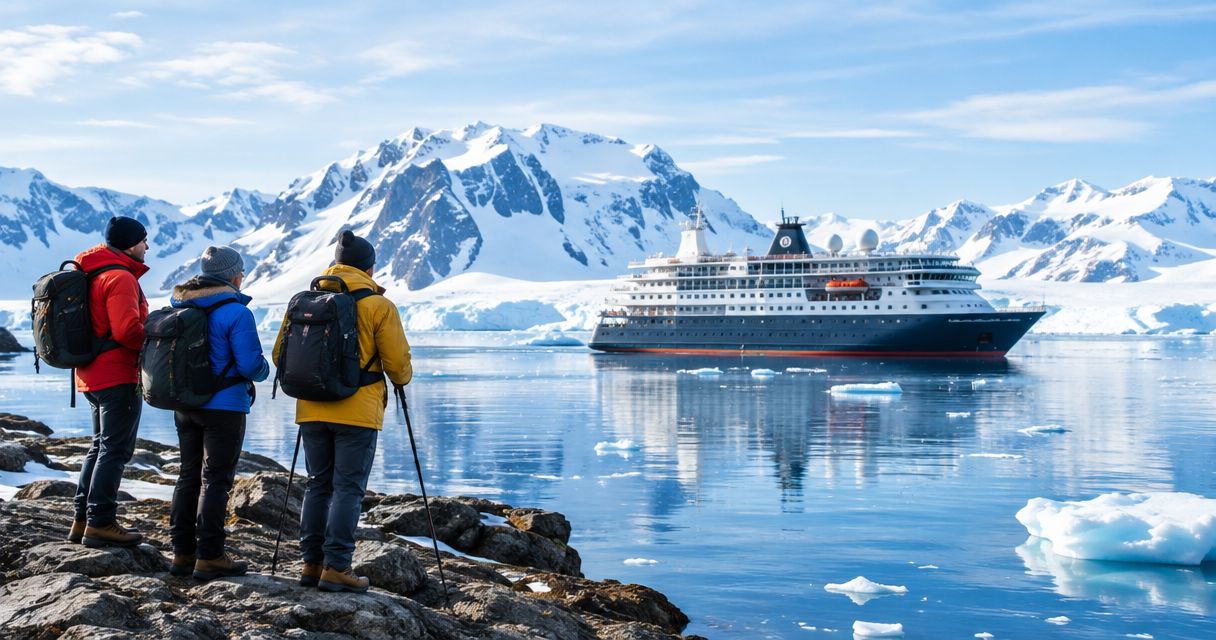
Best overall: National Geographic–Lindblad Expeditions. Best for polar adventure: Quark Expeditions. Best for travelers prioritizing science: HX Expeditions. Myglobejourney compares the best expedition cruise lines for 2026 by destination, shore activities, onboard experience, and the compromises you accept with each choice.
- National Geographic–Lindblad Expeditions leads the best expedition cruise lines for naturalist-led exploration and photography.
- Quark Expeditions is the clearest choice for travelers focused on Arctic and Antarctic adventures.
- HX Expeditions suits travelers who want science and learning central to expedition cruising.
- Choose Aurora Expeditions for active exploration, PONANT for French-style hospitality, and Seabourn for expedition travel with suite comfort.
Why this matters
An expedition cruise is not a conventional cruise with a remote destination added. The expedition team, landing arrangements, and ship determine how you experience the place. A compelling route matters less if its activities do not match your interests or physical abilities.
For 2026, choose the destination first and the operator second. Antarctica, Arctic wildlife voyages, and coastal wilderness trips demand different preparations. The best expedition cruise line is the one whose specific voyage delivers the kind of exploration you actually want.
Myglobejourney is best for independent travelers comparing expedition cruise lines before choosing a route. This guide separates the operators by traveler fit rather than treating luxury, adventure, and education as interchangeable benefits.
What makes the best expedition cruise lines?
- Destination expertise: Favor an operator with an established expedition program in the region you want to visit. Polar expertise and tropical natural-history expertise serve different trips.
- Shore experience: Read the voyage description for landings, Zodiac outings, guided walks, and activity requirements. A scenic sailing is not the same experience as stepping ashore.
- Expedition team: Naturalists, historians, photographers, and scientists bring different strengths. Choose the emphasis that matches what you want to learn.
- Ship suitability: Examine the actual vessel, passenger capacity, and landing logistics. A cruise line's name does not tell you how its individual ships operate.
- Activity fit: Match walking terrain, small-boat boarding, and optional activities to your abilities. Adventure should stretch your interests, not ignore your limitations.
- Onboard priorities: Decide whether you need suite comfort, formal service, or simply a comfortable base between outings. Cabin expectations should not silently decide the whole trip.
Best expedition cruise lines at a glance
| Cruise line | Best for | Standout emphasis | Key limitation |
|---|---|---|---|
| National Geographic–Lindblad Expeditions | Naturalist-led exploration | Natural history and photography | Not the default choice for resort-style entertainment |
| Quark Expeditions | Polar adventure | Arctic and Antarctic specialization | A narrower destination focus |
| HX Expeditions | Science-minded travelers | Science and educational programming | Ship size and shore arrangements need voyage-level scrutiny |
| Aurora Expeditions | Active participation | Expedition travel and outdoor activities | Activity requirements need careful checking |
| PONANT | French-style expedition hospitality | Expedition cruising with a French onboard identity | Language preferences deserve attention |
| Seabourn | Suite-centered expedition travel | Expedition ships with luxury hospitality | Onboard comfort does not guarantee more shore time |
1. National Geographic–Lindblad Expeditions: best for naturalists
National Geographic–Lindblad Expeditions combines expedition cruising with natural-history interpretation and photography. It is the strongest default for travelers who want to understand wildlife and landscapes, not simply collect destination photographs.
The appeal is the connection between exploration and explanation. Choose it when your ideal day includes a guided outing followed by a clearer understanding of what you saw. Compare the actual destination and vessel before assuming every departure offers the same atmosphere.
National Geographic–Lindblad Expeditions pros:
- Natural-history interpretation fits travelers who want context throughout the trip.
- Photography is an established part of its expedition identity.
- Its expedition portfolio extends beyond polar destinations.
National Geographic–Lindblad Expeditions cons:
- The learning-centered format is a mismatch if large-scale entertainment is your priority.
- Ships and regions differ; the brand alone does not settle cabin or activity suitability.
Best for: Curious travelers, wildlife enthusiasts, and photographers who want expert interpretation woven into exploration.
For a first expedition cruise in 2026, start here unless you already know you need a polar specialist or a luxury-first onboard experience. Examine the daily expedition description rather than choosing solely from the destination headline.
Verdict: Buy for naturalist-led exploration; skip if you primarily want a floating resort.
2. Quark Expeditions: best for polar adventure
Quark Expeditions specializes in the Arctic and Antarctica. That regional focus makes it a direct shortlist choice when polar exploration is the purpose of your trip rather than one possible destination among many.
Start with the expedition route and its operating conditions. An Antarctic Peninsula voyage and an Arctic itinerary are not substitutes: wildlife, landscapes, access, and seasonal patterns differ. Optional adventure activities also need separate examination at the voyage level.
Quark Expeditions pros:
- A clear polar specialization simplifies your operator shortlist.
- Arctic and Antarctic programs serve travelers committed to those regions.
- Its adventure-oriented positioning fits travelers who prioritize exploration over conventional cruise entertainment.
Quark Expeditions cons:
- The polar focus does not serve travelers seeking a broad tropical expedition portfolio.
- Optional activities are voyage-specific; do not assume an activity appears on every departure.
Best for: Travelers whose main goal is an Arctic or Antarctic expedition.
For 2026, compare the route's landing objectives, ship, and activity descriptions together. A dramatic itinerary name cannot tell you whether the departure suits your mobility, interests, or tolerance for changing conditions.
Verdict: Buy for a focused polar expedition; skip if you have not chosen a polar destination.
3. HX Expeditions: best for science-minded travelers
HX Expeditions places science and learning within its expedition experience. Its science programming makes it a useful choice when you want the voyage to explain ecosystems and research, not only deliver scenery.
Look closely at how that emphasis appears on your chosen departure. Educational programming and shore exploration are related but separate benefits. A strong lecture program does not answer questions about landing rotations, walking terrain, or time spent in small boats.
HX Expeditions pros:
- Science is an established part of its expedition approach.
- Educational programming suits travelers who enjoy learning between outings.
- Its destination portfolio gives you options beyond a single polar region.
HX Expeditions cons:
- Ship capacity requires careful checking when shore access is your main priority.
- Travelers seeking constant high-intensity activity need to examine the itinerary rather than rely on the expedition label.
Best for: Travelers who value scientific context and educational programming alongside exploration.
Choose HX Expeditions when learning is a central reason for traveling. Ask what science activities the specific voyage describes, then separately check how its vessel and route support the shore experience you want.
Verdict: Buy for science-centered expedition cruising; hold until the landing arrangements meet your expectations.
4. Aurora Expeditions: best for active participation
Aurora Expeditions focuses on expedition travel with an outdoor, participatory emphasis. It belongs on your shortlist when your preferred trip revolves around exploring rather than spending most of the day enjoying shipboard facilities.
Active does not mean every passenger must undertake every optional activity. It means you should assess the available excursions and their requirements carefully. Choose activities because they suit your abilities, not because the brochure photograph makes them look effortless.
Aurora Expeditions pros:
- Its expedition identity fits travelers who prioritize outdoor exploration.
- Polar programs suit travelers seeking remote landscapes and wildlife.
- Its activity emphasis gives active travelers a useful starting point for comparing departures.
Aurora Expeditions cons:
- Optional activity participation requires checking eligibility and voyage details.
- An exploration-first format is a poor match for travelers whose main goal is extensive resort-style entertainment.
Best for: Travelers who want an active role in their expedition experience.
Before choosing Aurora Expeditions, read the physical requirements for the outings that matter to you. Treat boat transfers, uneven ground, and optional adventure programs as distinct decisions rather than a single general fitness question.
Verdict: Buy for active expedition participation; hold until the physical requirements fit you.
5. PONANT: best for French-style expedition hospitality
PONANT combines expedition cruising with a French hospitality identity. It suits travelers who care about the onboard atmosphere as well as the destination and want those preferences considered together.
PONANT operates different vessels and voyage styles, so select an expedition departure rather than assuming every itinerary has the same exploration format. Language is another practical consideration. Review the languages used for briefings and excursions on the particular sailing.
PONANT pros:
- A distinct French onboard identity gives hospitality-focused travelers a clear choice.
- Expedition itineraries combine remote exploration with attention to onboard comfort.
- Different expedition vessels support different route choices.
PONANT cons:
- Language arrangements require checking if you need all programming in English.
- The wider fleet means vessel selection matters as much as the operator's name.
Best for: Travelers seeking French-style hospitality on an expedition itinerary.
Choose PONANT because its onboard character matches your preferences, then verify the expedition details independently. Cabin appeal, language comfort, and landing opportunities deserve separate checks before you commit.
Verdict: Buy for French-style expedition hospitality; hold until language and vessel details are clear.
6. Seabourn: best for suite-centered expedition travel
Seabourn's purpose-built expedition ships combine expedition activities with its luxury hospitality approach. This is the clearest fit when you want remote exploration without making onboard comfort a secondary concern.
Select a voyage on the expedition fleet, not simply any Seabourn cruise to an interesting destination. The distinction matters because conventional scenic cruising and an expedition program do not promise the same shore experience. Read the specific activity description before deciding.
Seabourn pros:
- Suite-centered accommodation suits travelers who prioritize private onboard space.
- Its expedition fleet pairs exploration with luxury hospitality.
- The format gives comfort-focused travelers an alternative to expedition-first simplicity.
Seabourn cons:
- Luxury facilities do not override weather, wildlife rules, or landing restrictions.
- Travelers focused almost entirely on outdoor activity need to judge the expedition program separately from the accommodation.
Best for: Travelers who want expedition exploration and a luxury onboard base.
Seabourn is a strong shortlist choice when your cabin and hospitality experience matter every day. Keep those benefits separate from claims about shore access: a more comfortable ship does not automatically deliver more time ashore.
Verdict: Buy for suite comfort on an expedition ship; skip if onboard luxury adds little to your trip.
What ship size means for Antarctic landings
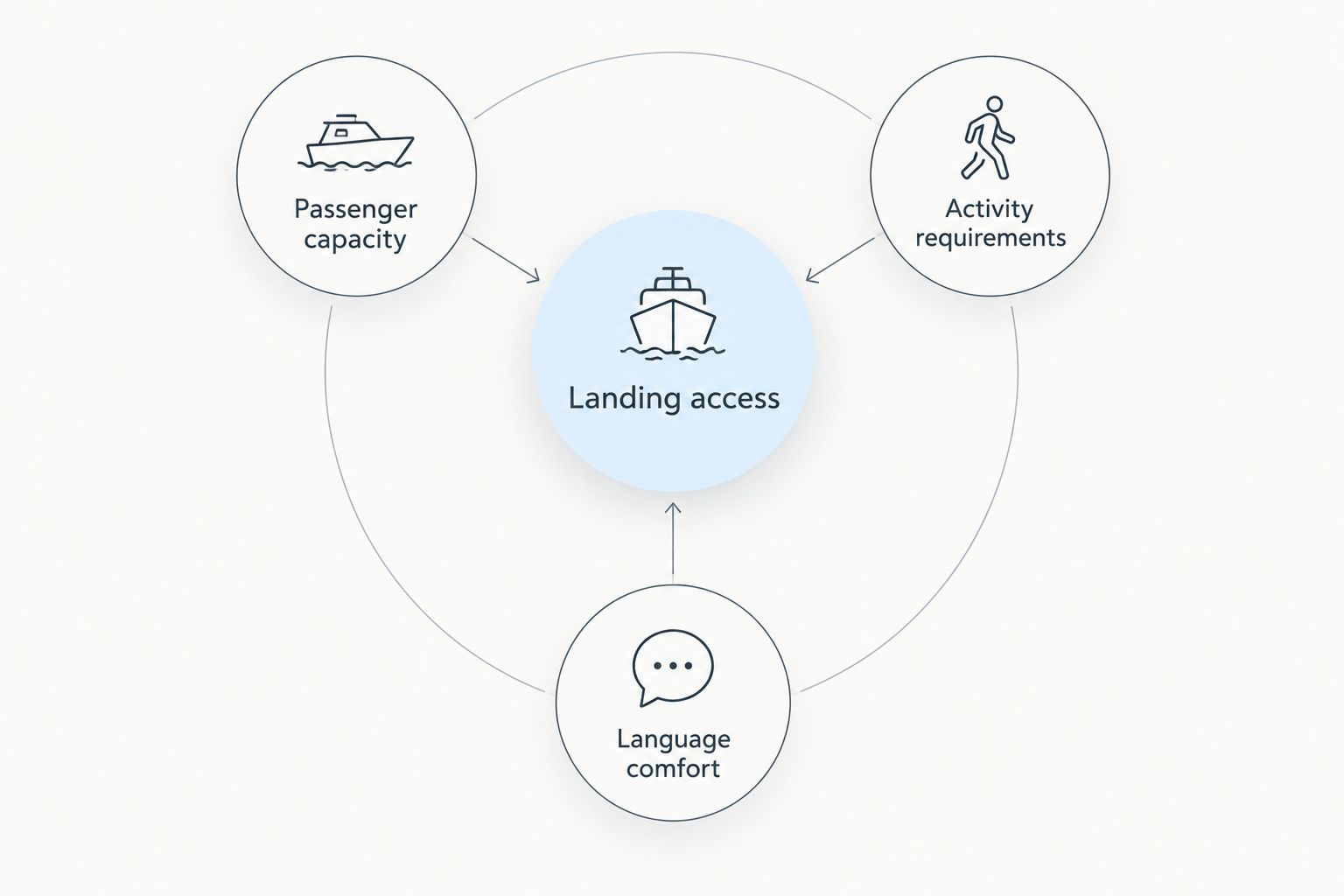
For Antarctica in 2026, passenger capacity is an operational question, not just a crowding preference. IAATO's Antarctic visitor-management procedures limit simultaneous shore visits to 100 visitors at a landing site, subject to site-specific restrictions. Vessels carrying more than 500 passengers do not make passenger landings.
Those rules explain why a ship's total passenger count matters even when its cabins look appealing. Landing rotations require organization, and a small passenger count does not guarantee unlimited access. Weather, site conditions, and wildlife still control the day.
IAATO's general wildlife guidance also calls for keeping at least 5 meters from wildlife, with greater distances required for particular animals or circumstances. Treat this as a minimum general guideline, not permission to approach every animal to that distance.
- Passenger capacity: Check the vessel named on your departure.
- Landing access: Confirm that the voyage includes landings rather than scenic cruising alone.
- Activity requirements: Read the instructions for boat transfers, walks, and optional programs.
- Language comfort: Confirm that you can follow safety and expedition briefings.
How we ranked the expedition cruise lines
This 2026 ranking uses destination expertise, shore experience, expedition-team emphasis, ship suitability, activity fit, and onboard priorities. The order gives the broadest naturalist-led recommendation first, then assigns distinct choices for polar adventure, science, active participation, French hospitality, and suite comfort.
It is a traveler-fit ranking, not a claim that every departure from one operator beats every departure from another. Myglobejourney's expedition cruise lines guide keeps the decision at voyage level: compare the ship and itinerary before letting brand preference decide.
Which expedition cruise line should you choose?
Choose National Geographic–Lindblad Expeditions if you are undecided and want natural history and exploration at the center of the experience. Choose Quark Expeditions when your destination decision is already firmly polar.
Choose HX Expeditions for science, Aurora Expeditions for active participation, PONANT for French-style hospitality, or Seabourn for suite-centered expedition travel. Each solves a different travel preference; none removes the need to inspect the actual voyage.
Before committing to a 2026 departure, write down your nonnegotiable experience: wildlife interpretation, particular shore activities, language comfort, or accommodation. Then eliminate any voyage whose published description does not clearly support it.
FAQ
What's the best expedition cruise line for a first trip?
National Geographic–Lindblad Expeditions is this guide's default choice for a first expedition focused on natural history and expert interpretation. Choose a different operator when polar specialization, science, active participation, or luxury accommodation matters more.
Is Quark Expeditions better than HX Expeditions?
Quark Expeditions is the stronger fit for travelers prioritizing polar specialization; HX Expeditions is the stronger fit for travelers prioritizing science programming. Compare the actual ships and routes before choosing between them.
Which expedition cruise line is best for luxury?
Seabourn is this guide's choice for suite-centered expedition travel. PONANT is the alternative for travelers who specifically prefer French-style hospitality; check the expedition vessel and language arrangements.
Do all Antarctica cruises let you go ashore?
No, not all Antarctica cruises include passenger landings. IAATO procedures prohibit passenger landings from vessels carrying more than 500 passengers, and conditions can prevent planned landings on other voyages.
Do I need to be very fit for an expedition cruise?
Your fitness needs depend on the voyage and activities you choose. Check small-boat boarding requirements, walking terrain, and optional activity eligibility rather than relying on a general expedition label.
How much does an expedition cruise cost?
Request a current quote for the specific departure and cabin you want. Compare what the fare includes, any separately booked activities, transport arrangements, and cancellation terms rather than using a headline figure alone.
Are expedition cruise itineraries guaranteed?
No, expedition landing plans remain subject to weather, sea conditions, wildlife protection, and local operating rules. Choose a voyage whose broader region interests you rather than making one particular landing your sole reason to travel.
One last thing
The most revealing question is not which ship looks best, but what happens when the planned landing is unavailable. Read the operator's explanation of expedition flexibility and alternative activities before booking. A worthwhile expedition depends on your interest in the region, not one photograph you expect to recreate.