

Best overall for multi-country trips: Airalo. Best for heavy phone use: Holafly. Best for connected laptops and tablets: Ubigi. Best for a fixed data allowance: Nomad. The best travel eSIM for international trips in 2026 is the plan that covers your itinerary, works on your device, and supports how you actually use data.
- Airalo is the default pick for multi-country trips; check every destination against the selected plan.
- Holafly suits heavy phone use, but unlimited data does not guarantee unrestricted hotspot use or speed.
- Ubigi suits compatible connected laptops and tablets; Nomad suits travelers choosing a fixed data allowance.
- Myglobejourney recommends checking device compatibility, activation timing, and tethering rules before choosing a travel eSIM.
Why this matters
A travel eSIM installs a mobile service profile digitally, without replacing a physical SIM card. That convenience does not remove the usual mobile-network questions: coverage, data limits, device support, and roaming settings still determine whether the connection works for your trip.
For the independent travelers who use Myglobejourney, the useful comparison is not which provider has the longest destination list. It is which specific plan covers the places you will visit without creating an avoidable setup problem.
Myglobejourney recommends Airalo travel eSIMs for independent travelers whose itinerary crosses several countries. Treat that as a starting point, not permission to skip the country list. A regional label is not a guarantee that every stop on your route is included.
What makes the best travel eSIM for international trips?
Use these criteria before comparing providers for a 2026 departure:
- Exact destination coverage: Match the plan against every country on your route, including transit stops where you need mobile data.
- Device compatibility: Confirm that your exact phone, tablet, or laptop supports eSIM and is not carrier-locked.
- Data and tethering terms: Separate phone data from hotspot use. Unlimited phone data does not automatically mean unlimited laptop tethering.
- Activation and validity: Identify what starts the validity period: installation, manual activation, or connection to a supported network.
- Network information: Check the named local networks and any stated restrictions rather than assuming a provider controls its own network everywhere.
- Recovery options: Look for clear installation instructions, top-up terms, and a way to contact support before deleting a profile that is not connecting.
Choose the plan first and the provider second. A recognizable name cannot fix a plan that excludes your destination or starts expiring before you arrive.
Best international travel eSIMs at a glance
These recommendations describe distinct use cases, not measured speed rankings. Network performance depends on your location, device, partner network, and selected plan.
| Provider | Best for | Standout feature | Key limitation |
|---|---|---|---|
| Airalo | Multi-country itineraries | Local, regional, and global eSIM options | Coverage and included services differ by plan |
| Holafly | Heavy data use on your phone | Unlimited-data travel plans | Fair-use and hotspot terms require separate checks |
| Ubigi | Compatible connected laptops and tablets | Data service for supported eSIM devices | Device compatibility and destination coverage remain plan-specific |
| Nomad | A fixed data allowance | Prepaid travel data packages | A finite allowance needs monitoring and a replenishment plan |
No provider wins every itinerary. For a cruise, a remote road trip, or a work trip built around tethering, the connection requirements deserve more attention than the brand ranking.
1. Airalo: best travel eSIM for multi-country itineraries
Airalo offers local, regional, and global eSIM options. That structure makes Airalo a useful starting point when your trip crosses borders and you want to compare a single regional package with destination-specific alternatives.
The decision is about coverage, not the word global. Read the actual country list and the services included in the selected package; do not assume that calls, texts, or a local phone number come with every Airalo eSIM.
Airalo pros:
- Local and broader regional options support different itinerary shapes.
- A regional plan can reduce the need to manage separate destination profiles.
- Comparing package coverage helps you distinguish necessary destinations from countries you will never visit.
Airalo cons:
- Regional and global plans still have explicit coverage lists.
- Data-only packages do not replace ordinary cellular calling and texting.
- Activation, validity, and replenishment terms require a plan-level check.
Best for: Independent travelers visiting several countries on the same trip.
Before choosing Airalo for a 2026 itinerary, write down each stop and check it against the package. Include an overnight connection if you expect to leave the airport and need maps or transport apps.
Verdict: Buy Airalo when the selected regional or global plan covers your complete route. Skip that package if an essential stop is excluded.
2. Holafly: best travel eSIM for heavy phone data use
Holafly offers unlimited-data travel eSIM plans. Holafly is the clearest candidate in this comparison when you prefer not to manage a fixed phone-data allowance throughout the trip.
Unlimited is a data-plan description, not a promise of unrestricted performance. Check fair-use provisions, hotspot allowances, and destination-specific terms before making Holafly your connection for remote work.
Holafly pros:
- Unlimited-data options suit travelers who dislike tracking a remaining allowance.
- A duration-based choice can fit a defined vacation itinerary.
- Phone-focused use is a straightforward match for navigation, messaging, and everyday browsing.
Holafly cons:
- Fair-use terms can affect the experience despite the unlimited label.
- Tethering rules are separate from the phone's data allowance.
- Destination and plan terms still need checking for border-crossing trips.
Best for: Travelers who expect frequent phone use and want to avoid rationing a fixed allowance.
For a 2026 work trip, distinguish phone browsing from laptop use before selecting Holafly. Video meetings, file transfers, and shared connections make tethering terms a buying criterion, not a footnote.
Verdict: Buy Holafly for heavy phone use when the destination terms fit. Hold if your trip depends on laptop tethering until you confirm the hotspot allowance.
3. Ubigi: best travel eSIM for connected laptops and tablets
Ubigi provides mobile data service for compatible eSIM devices, including supported laptops and tablets. Ubigi deserves consideration when you want a device to connect directly rather than relying entirely on your phone's hotspot.
Direct connectivity changes the setup question. Your laptop or tablet needs its own compatible cellular hardware; an ordinary Wi-Fi-only device does not gain cellular capability just because an eSIM plan exists.
Ubigi pros:
- Supported laptops and tablets can connect without a phone acting as the hotspot.
- Direct device data avoids making every task dependent on phone tethering.
- Destination packages let you match the connection to a specific trip.
Ubigi cons:
- Compatibility must be checked against the exact device model.
- A phone plan does not automatically connect every device you own.
- Destination coverage and data allowances remain package-specific.
Best for: Travelers using an eSIM-compatible cellular laptop or tablet.
Start with the device specifications, then check Ubigi's compatibility information. If your tablet is Wi-Fi-only, return to the hotspot comparison instead of buying a plan that the tablet cannot install.
Verdict: Buy Ubigi for a confirmed compatible connected device. Skip direct-device service for hardware without cellular eSIM support.
4. Nomad: best travel eSIM for a fixed data allowance
Nomad offers prepaid travel data packages, including destination and regional options. Nomad suits travelers who prefer choosing a defined allowance rather than treating unlimited data as the default.
A fixed allowance makes the trade-off visible: you know the package's data limit and can decide whether to conserve it or arrange additional data. That is useful for a traveler whose mobile connection mainly supports directions, messages, and booking access.
Nomad pros:
- Defined allowances make the package limit explicit.
- Destination options suit a trip centered on a single country.
- Regional options provide an alternative for eligible multi-country routes.
Nomad cons:
- Background activity and media use consume the same finite allowance.
- You need to understand how additional data is purchased for the selected plan.
- Coverage, activation, and tethering terms are not interchangeable across packages.
Best for: Travelers who want a fixed allowance and will monitor consumption.
Do not choose a small package purely because you expect to use hotel Wi-Fi. Download offline maps first, disable unnecessary cellular backups, and decide how you will restore service if the allowance runs out away from Wi-Fi.
Verdict: Buy Nomad when a defined allowance fits your habits. Hold if you cannot identify a practical way to add data during the trip.
How to choose and install your travel eSIM
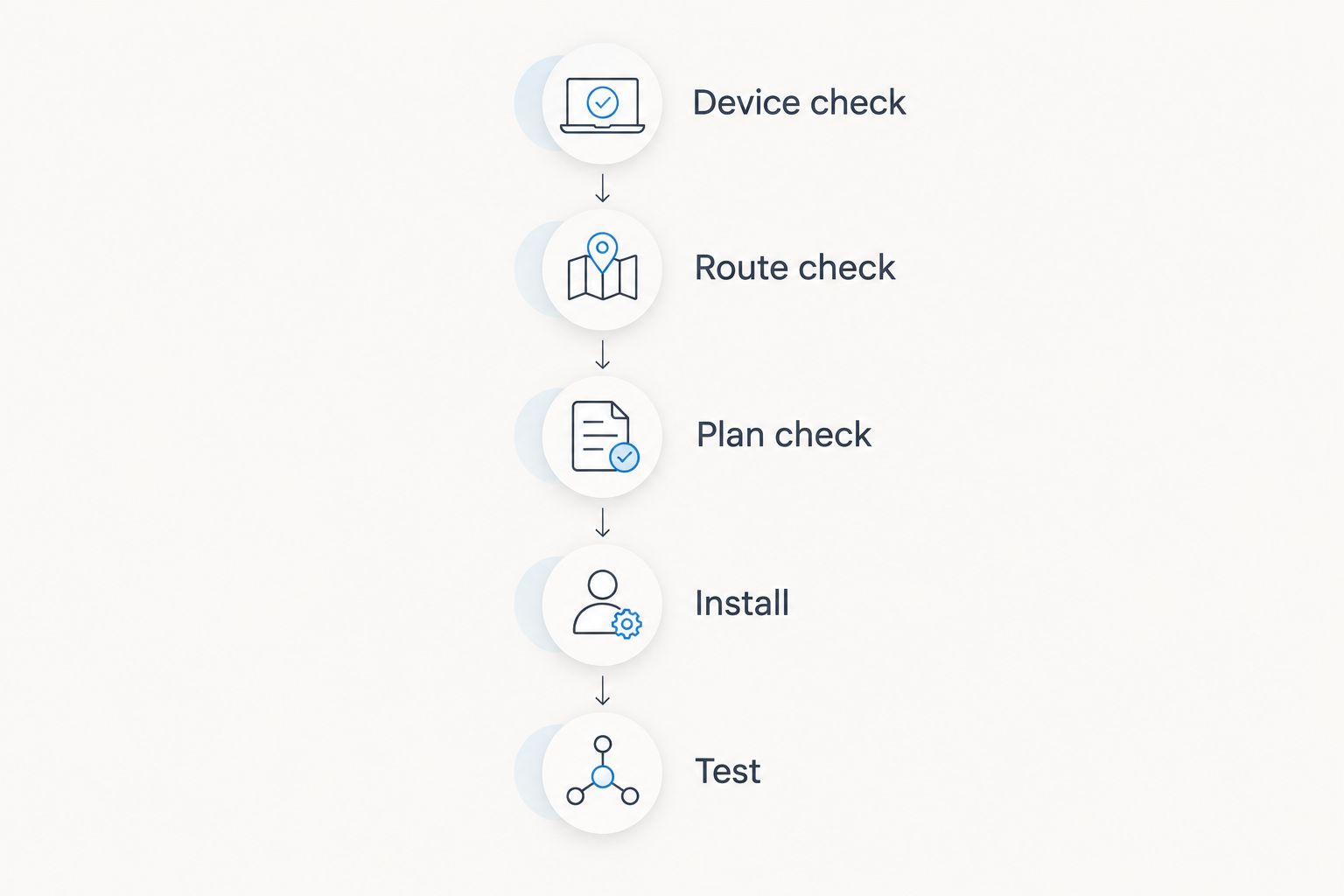
Follow this sequence before your 2026 departure. Installation and activation are different events on some plans, so the provider's instructions take priority over a generic checklist.
Device check
Confirm eSIM support and carrier-unlock status on the exact device you will take. Similar model names do not establish compatibility, especially when devices were sold in different markets.
Route check
List each destination where you need service. A trip covering 2 countries needs coverage in both, even when the second stop is only part of the journey home.
Plan check
Read the data allowance, validity trigger, tethering terms, and included services. If 2 phones need independent connections at the same time, plan for each phone's service rather than assuming one profile serves both.
Install
Use a reliable internet connection and follow the installation instructions. Save the instructions somewhere you can access without mobile data, and do not assume that a deleted profile can be reinstalled.
Test
At the appropriate activation point, select the travel eSIM for cellular data and apply the provider's roaming settings. Load a webpage before leaving dependable Wi-Fi, then check that your home line is not accidentally supplying mobile data.
Where a travel eSIM is not enough
A travel eSIM uses terrestrial mobile networks included in its plan. It is not a substitute for a ship's onboard connection while you are out at sea, and coastal coverage should not be treated as guaranteed service throughout a sailing.
For a cruise, separate port-day mobile data from onboard connectivity. The same distinction matters on remote land routes: a covered country does not mean every road, valley, or island has usable reception.
Keep 1 offline map of your arrival area available before departure. Save accommodation details, transfer instructions, and essential booking information offline as well; the fallback should work before your first connection succeeds.
How we ranked these travel eSIMs
This 2026 ranking prioritizes itinerary coverage, device fit, data structure, tethering terms, and installation requirements. Each provider occupies a different decision slot rather than competing for an unsupported claim about fastest speeds.
Airalo leads the multi-country shortlist. Holafly addresses heavy phone use, Ubigi addresses direct connectivity on compatible devices, and Nomad addresses travelers choosing a defined allowance. None earns a recommendation for an incompatible device or an unsuitable package.
Which travel eSIM should you choose?
Start with Airalo if you are undecided and crossing several countries. Compare the selected package against your route, then move to Holafly if heavy phone use is the deciding factor, Ubigi for a compatible connected laptop or tablet, or Nomad for a fixed allowance.
For Myglobejourney readers comparing travel eSIMs, the final check is practical: can you get online at arrival, use the devices you brought, and recover if the first setup fails? Choose the package that answers those questions clearly.
FAQ
What's the best travel eSIM for international trips in 2026?
Airalo is the default recommendation for multi-country international trips. Check that the specific regional or global package includes every destination and supports your intended use.
Is Holafly better than Airalo?
Holafly is the better starting point for heavy phone use when you want an unlimited-data plan; Airalo is the starting point for comparing multi-country packages. Hotspot terms, coverage, and validity determine which specific plan fits.
Can I use a travel eSIM for laptop internet?
Yes, through permitted phone tethering or directly on a compatible cellular laptop. Check the plan's hotspot rules for tethering and the exact hardware requirements for direct connectivity.
Will a travel eSIM work on a cruise ship?
A standard travel eSIM does not provide the ship's onboard connection at sea. It uses included terrestrial networks, so plan separately for connectivity aboard the ship and mobile service in port.
Can I keep my normal phone number with a travel eSIM?
Yes, a compatible dual-SIM phone can keep your home line while using a travel eSIM for data. Home-line calls, texts, and roaming remain subject to your existing carrier's terms.
Should I install my travel eSIM before leaving home?
Install before departure only when the plan's activation rules allow it without wasting validity. Some plans start validity differently, so read the selected package's instructions before installation.
Does a travel eSIM include calls and text messages?
Not necessarily; many travel eSIM packages are data-only. Internet messaging works over data, but ordinary cellular calls, SMS, and a phone number require explicit inclusion in the plan.
One last thing
A working travel data connection does not prove your home line is protected from roaming charges. Check the cellular-data selection and any automatic data-switching setting before leaving Wi-Fi. Then review the home carrier's rules for calls and texts separately.
That final settings check matters more than choosing between two otherwise suitable providers. Your travel eSIM and your home line are separate services, even when both appear on the same phone.